
The site plan vs floor plan sounds like a simple comparison, but it can decide whether your project feels smooth and stress-free or confusing and expensive. If you ever looked at building drawings and thought, “Wait… aren’t these all the same thing?” you are not alone.
Here’s the truth: one plan shows how your property fits into the land, and the other shows how your rooms fit into your home. Both are essential. Both solve different problems. And once you understand the difference, you will feel instantly more confident when talking to architects, contractors, and permit offices.
At Site Plan Architects, we help homeowners, builders, and developers get the right plans the right way, so the project moves forward without delays.
What Each Plan Really Does?
Before we go deeper, imagine this:
You are planning a new home, want the kitchen near the backyard, need enough driveway space, want sunlight in the living room, or are looking for privacy from neighbors.
Now ask yourself:
Do you need a drawing that shows your house layout inside?
Or do you need a drawing that shows where the house sits on the land?
You actually need both.
That’s why site plan vs floor plan is such an important topic. These plans work like a team. One handles the outside big picture. The other handles the inside experience.
What Is a Site Plan?
A site plan is a detailed drawing that shows your entire property from a top view. It focuses on the land and everything placed on it. In simple it is outside blueprint of your project.
A site plan answers questions like:
- Where will the building sit on the lot?
- How close is it to the property lines?
- Where is the driveway and parking?
- Where are utilities located?
- What is the slope and drainage direction?
A site plan matters most for permits and zoning approval because it proves your design follows local rules.
What Is a Floor Plan?
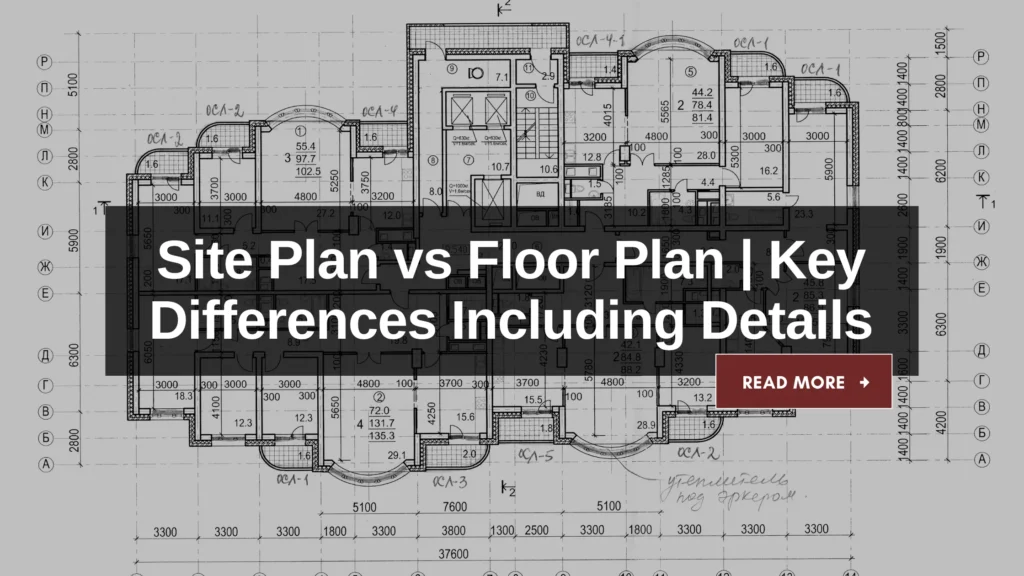
A floor plan is a top view drawing of the inside layout of a building. It shows how rooms connect and how the space works.
A floor plan answers questions like:
- How many bedrooms and bathrooms are there?
- Where is the kitchen located?
- How do you move from one room to another?
- Where are doors, windows, stairs, and closets?
When people say “house layout,” they usually mean the floor plan.
What things does each plan include?
Understanding what’s included makes the whole site plan vs floor plan discussion much clearer.
What a Site Plan Usually Includes
A site plan typically shows:
- Property boundary lines
- Setbacks (required distance from property lines)
- Building footprint location
- Driveways and walkways
- Parking areas
- Landscaping areas (sometimes)
- Existing structures (if any)
- Utility lines (water, sewer, electric)
- Drainage direction and grading
- Easements (areas with restrictions)
- North arrow and scale
- Street access and curb cuts
In simple words, it shows everything that affects how your building sits on the land.
What a Floor Plan Usually Includes
A floor plan typically shows:
- Room names and sizes
- Wall layout and thickness
- Door and window placement
- Stairs and hallways
- Kitchen layout (cabinets, island placement)
- Bathroom layout (toilet, shower, sink)
- Closets and storage areas
- Dimensions and measurements
- Notes for construction
It focuses on how you live inside the space.
Common Types of Site Plans
Proposed Site Plan
A proposed site plan shows what you are planning to build or add on your property. It includes the new building placement and any changes like a driveway, garage, ADU, deck, or pool. This is the plan most cities want when you apply for a permit.
Existing Site Plan
An existing site plan shows what is already on the property before any work starts. It includes the current house position, driveway, walkways, and other existing features. It helps professionals understand what they are working with before making changes.
Grading and Drainage Site Plan
This plan focuses on the land slope and how rainwater moves across the property. It helps make sure water does not collect near the home or flow into the wrong areas. Many cities ask for this plan when the project affects the ground level.
Utility Site Plan
A utility site plan shows where important services are located, like water lines, sewer lines, gas lines, and electric connections. This plan helps avoid costly mistakes during digging and construction and makes planning much easier.
Landscape Site Plan
A landscape site plan shows how the outdoor area will look and work. It includes things like planting areas, lawns, patios, paths, and outdoor spaces. It is useful when you want your outdoor area to look clean, planned, and well designed.
Common Types of Floor Plans
2D Floor Plan
A 2D floor plan is the most common type. It shows the inside layout from a top view, including rooms, walls, doors, windows, and measurements. Builders use this plan to understand the exact layout.
3D Floor Plan
A 3D floor plan looks more realistic than a normal drawing. It helps homeowners easily picture the space and understand how rooms will feel once built. It is great for visualization before construction starts.
Open Concept Floor Plan
An open concept floor plan keeps major areas connected, like the kitchen, dining, and living room. It makes the home feel bigger, brighter, and more social, which many modern homeowners prefer.
Closed Floor Plan
A closed floor plan keeps rooms separated with walls and doors. This layout gives more privacy and helps reduce noise. People who like quiet spaces often prefer this style.
Split Floor Plan
A split floor plan places the main bedroom on one side of the house and the other bedrooms on the opposite side. This design gives more privacy and works great for families or anyone who wants a quiet main bedroom area.
Key differences of site plan vs floor plan
Now let’s get straight to the point.
1) Purpose
- Site plan: Shows how the project fits on the property.
- Floor plan: Shows how the rooms fit inside the building.
2) What It Focuses On
- Site plan: Land, property lines, setbacks, driveways, utilities.
- Floor plan: Rooms, doors, windows, walls, movement inside.
3) What It Helps With
- Site plan: Zoning approval, permits, land rules, placement.
- Floor plan: Living comfort, room flow, interior design decisions.
4) Who Uses It Most
- Site plan: City planners, permit reviewers, surveyors, contractors.
- Floor plan: Homeowners, designers, builders, real estate buyers.
5) Scale
- Site plan: Covers the full lot and surrounding context.
- Floor plan: Covers the inside of a building level.
This is why site plan vs floor plan is not about which one is better. It is about what problem you are solving.
What Is a Building Plan?
A building plan is a general term. People use it to describe any drawing related to construction.
A building plan may include:
- Site plan
- Floor plan
- Elevations (front and side views)
- Roof plan
- Foundation plan
- Structural details
- Electrical plan
- Plumbing plan
- HVAC layout
So when someone says “I need a building plan,” they may mean one plan or a full set of plans. Always clarify.
What a Building Plan Includes
A complete building plan package often includes:
1) Site Plan: Shows lot layout, placement, and zoning compliance.
2) Floor Plans: Shows each level of the building and room layout.
3) Elevations: Shows what the building looks like from the outside.
4) Sections: Shows cut-through views to explain heights and construction layers.
5) Roof Plan: Shows slopes, ridges, and roof layout.
6) MEP Plans: MEP means Mechanical Electrical Plumbing. These guide installations.
When you understand this, the site plan vs floor plan confusion disappears. They are two pieces of a bigger system.
When You Need a Site Plan
You usually need a site plan when you:
- Apply for permits
- Build a new home or addition
- Add a garage, shed, or ADU
- Change driveway layout
- Add a pool, deck, or patio
- Need zoning approval
- Need setback compliance confirmation
If your project changes what happens on the land, you need a site plan.
When You Need a Floor Plan
You usually need a floor plan when you:
- Design a new home layout
- Renovate a kitchen or bathroom
- Add rooms or change walls
- Create an ADU interior layout
- Plan furniture placement
- Sell a property with layout visuals
- Improve flow and functionality
If your project changes what happens inside, you need a floor plan.
And yes, many projects require both. That’s why site plan vs floor plan matters so much for planning.
Smart Way to Get a Site or Floor Plan
Many people waste time searching for drawings that do not match their property or project. Let’s make this easy.
Step 1: Decide Your Goal
Ask yourself:
Do I need permit approval, interior layout design or need both?
This tells you whether you need a site plan, a floor plan, or a full building plan set.
Step 2: Gather Basic Property Info
To create accurate plans, you may need:
- Property address
- Lot dimensions
- Existing survey (if available)
- Photos of the site and building
- Local zoning requirements
- Measurements (for floor plans)
Step 3: Work With a Professional
This is where Site Plan Architects helps.
At Site Plan Architects, we focus on accurate drawings that meet real permit needs. We create clean, detailed plans that make approval easier and construction smoother.
Common Mistakes to Avoid That Cause Delays
Many people struggle with permits because of avoidable mistakes. Here are the big ones.
1) Confusing Site Plan with Floor Plan
Some homeowners submit a floor plan when the city asks for a site plan. The permit office rejects it.
2) Wrong Measurements
Even small errors can create big issues. A few feet can mean a setback violation.
3) Missing Setbacks
Setbacks are not optional. Cities care about them a lot.
4) Ignoring Easements
Easements can restrict building placement. If you build in one in, you may need to remove it later.
5) Poor Drawing Quality
Messy plans slow everything down. Clear plans speed everything up.
Proper how know of site plan vs floor plan helps you avoid these mistakes.
What Is a Split Floor Plan?
A split floor plan is a layout where the primary bedroom sits on one side of the house and the other bedrooms sit on the opposite side.
People love split floor plans because they offer:
- More privacy for parents
- Less noise between bedrooms
- Better separation for guests
- Great layout for families with different schedules
You will often see split floor plans in:
- Single-story homes
- Ranch-style homes
- Modern suburban designs
If you want comfort and privacy, this layout feels like a luxury without extra cost.
What Does WIC Mean in a Floor Plan?
WIC means Walk In Closet.
It shows a closet large enough for a person to walk into and move around.
A WIC usually includes:
- Hanging rods
- Shelves
- Storage space
- Sometimes a dressing area
Other closet abbreviations you may see:
- CL: Closet
- LIN: Linen closet
- PAN: Pantry
Knowing these terms helps you read floor plans like a pro.
Other Common Plan Terms You Should Know
Plans often include short terms that confuse homeowners. Here are some common ones.
General Plan Terms
Elevation: Outside view of building
Section: Cut through view showing heights
Scale: Ratio of drawing size to real size
Dimension: Measurement lines and numbers
Setback: Required distance from property line
Site Plan Terms
Property line: Lot boundary
Easement: Restricted-use area
Grading: Land slope shaping
Drainage: Water flow direction
Impervious surface: Hard surfaces like concrete
Floor Plan Terms
FF: Finished floor
UON: Unless otherwise noted
TYP: Typical
NTS: Not to scale
Ref: Refrigerator
DW: Dishwasher
W D: Washer and dryer
FP: Fireplace
Once you learn these, you will understand drawings faster and communicate better.
How These Plans Work Together
Here’s the best way to think about it:
The site plan sets the stage.
The floor plan creates the lifestyle.
You can design the most beautiful floor plan in the world, but if it violates setbacks, the city will reject it.
You can also place a building perfectly on the lot, but if the interior layout feels awkward, daily life becomes frustrating.
That’s why site plan vs floor plan is not a battle. It is a partnership.
Example: A Simple Real Life Scenario
You want a big kitchen window with sunlight, patio outside the kitchen and driveway that fits two cars.
To make that happen:
Site plan places the house correctly for sunlight and driveway space. Floor plan places the kitchen where it connects naturally to the patio
Together, they create function and comfort.
Choose the Right Plan and Move Forward Confidently
If you remember only one thing, remember this: site plan vs floor plan is about outside placement versus inside layout. A site plan focuses on your land, boundaries, access, and compliance. A floor plan focuses on rooms, comfort, and flow.
When you understand both, you stop guessing. You start planning like a pro.
At Site Plan Architects, we help homeowners and builders get accurate plans that feel clear, professional, and permit-ready. If you want your project to move smoothly, start with the right plan set and build with confidence.
Whether you are designing a new home, adding an ADU, or planning an addition, the right drawings will protect your budget, save your time, and reduce stress.